
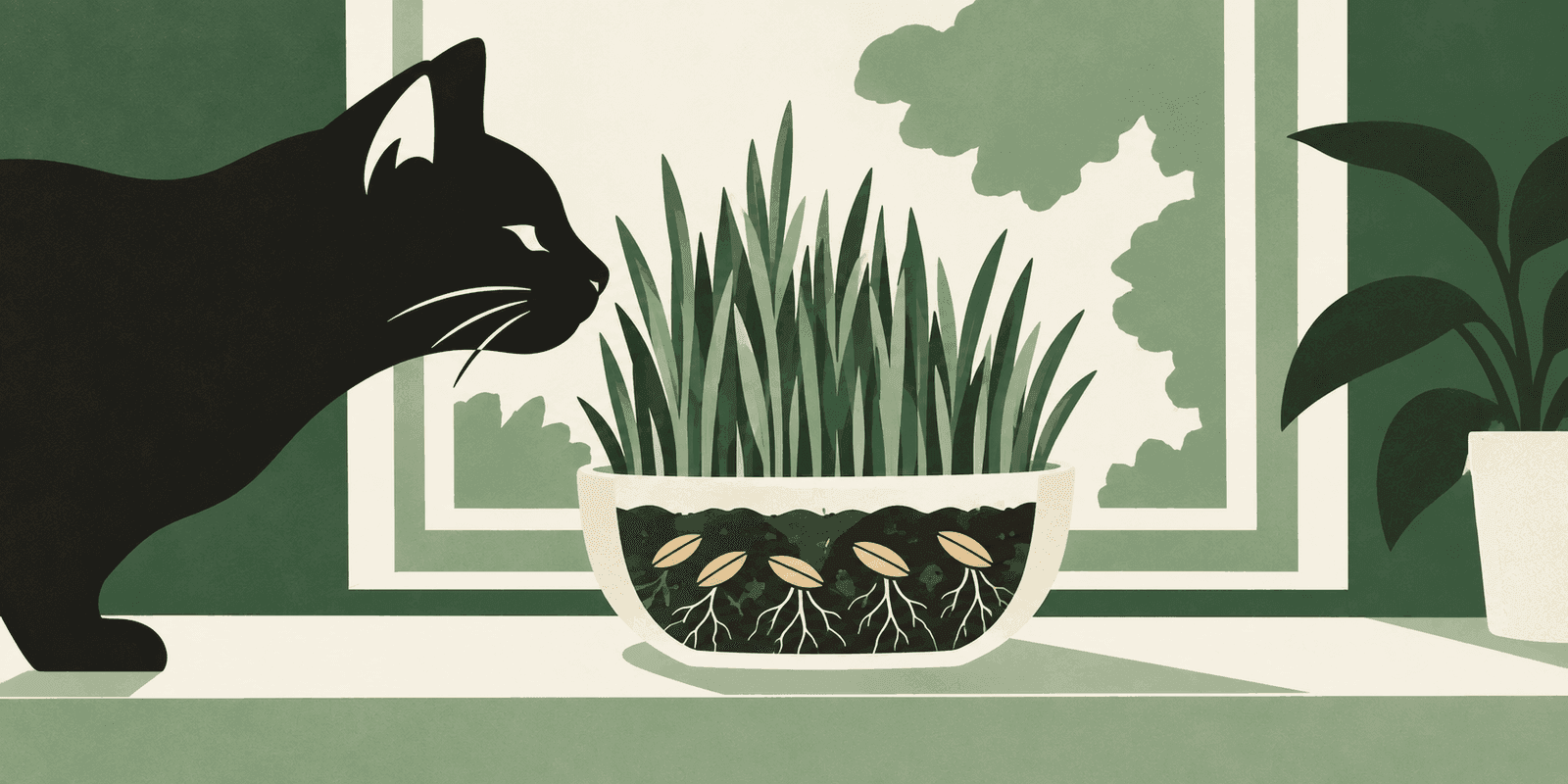
What cat grass is
“Cat grass” usually means young shoots of cereal grains, grown in a small pot for a cat to sniff and nibble. Oats are an easy place to start, and University of Wisconsin Extension suggests growing oats or other grains for cats who are drawn to greenery. It's a different plant from catnip, Nepeta cataria, and it's a snack rather than a replacement for complete cat food.1,2,3
Growing your own means you know exactly what seed and soil went into it.
Start with labeled seed and a draining pot
Buy seed sold for growing edible oat shoots, or a cat-grass kit that names the grain. Skip lawn seed and any seed that may have been treated; Penn State Extension recommends untreated seed for shoots grown to be eaten.4
Use a clean, shallow pot with drainage holes and fresh seed-starting mix. Illinois Extension recommends dampening the mix before sowing, planting at the depth on the seed packet, and keeping it moist while the seeds sprout, without letting mold build up under a cover.5
Once shoots appear, give the pot plenty of light, following the packet's instructions. A bright window or a grow light works for indoor seedlings; Oregon State Extension describes that setup and suggests checking moisture every day. Keep the pot away from your cat until the shoots are established, so the seeds and loose soil aren't the first things they sample.6
Check the pot daily for dry or soggy soil and any mold. Water gently when the surface feels dry and let the extra drain away. If nothing sprouts on the packet's schedule, look at the seed's age, the moisture, and the light. If mold appears, throw out the batch and wash the pot before starting again, and give the next one more air.5,6
Let your cat decide how interested they are
Set the pot down while you're around and see what your cat does. Some ignore it completely, some sniff, and some settle in for a graze. Liking grass doesn't mean a cat is missing a nutrient or needs to “detox.” The ASPCA notes that even non-toxic plants can make a cat vomit or upset their stomach, so if your cat vomits repeatedly, can't keep food down, or seems ill after eating plants, call your veterinarian.7
Catnip is a different plant with a different effect. The ASPCA says Nepeta cataria can excite some cats, calm others, and cause vomiting or diarrhea. A packet with a cat on the front might contain either, so check the plant or grain name before you buy.2
A small pot of oat grass gives a plant-curious cat something of their own to chew. It won't guarantee they leave your other plants alone, so keep toxic and unidentified plants well out of reach.
Sources
- Houseplants and Your PetsUniversity of Wisconsin–Madison Extension
- Toxic and Non-toxic Plants: CatnipASPCA Animal Poison Control Center
- “Complete and Balanced” Pet FoodUS Food and Drug Administration
- Growing MicrogreensPenn State Extension
- Start Herb Seeds IndoorsUniversity of Illinois Extension
- MicrogreensOregon State University Extension
- Toxic and Non-Toxic PlantsASPCA Animal Poison Control Center
